Genesis 21:24 Daily Devotional & Meaning – Abraham’s Oath, Freedom to Choose, and Love in an Imperfect World

Daily Verses Everyday! Day 89
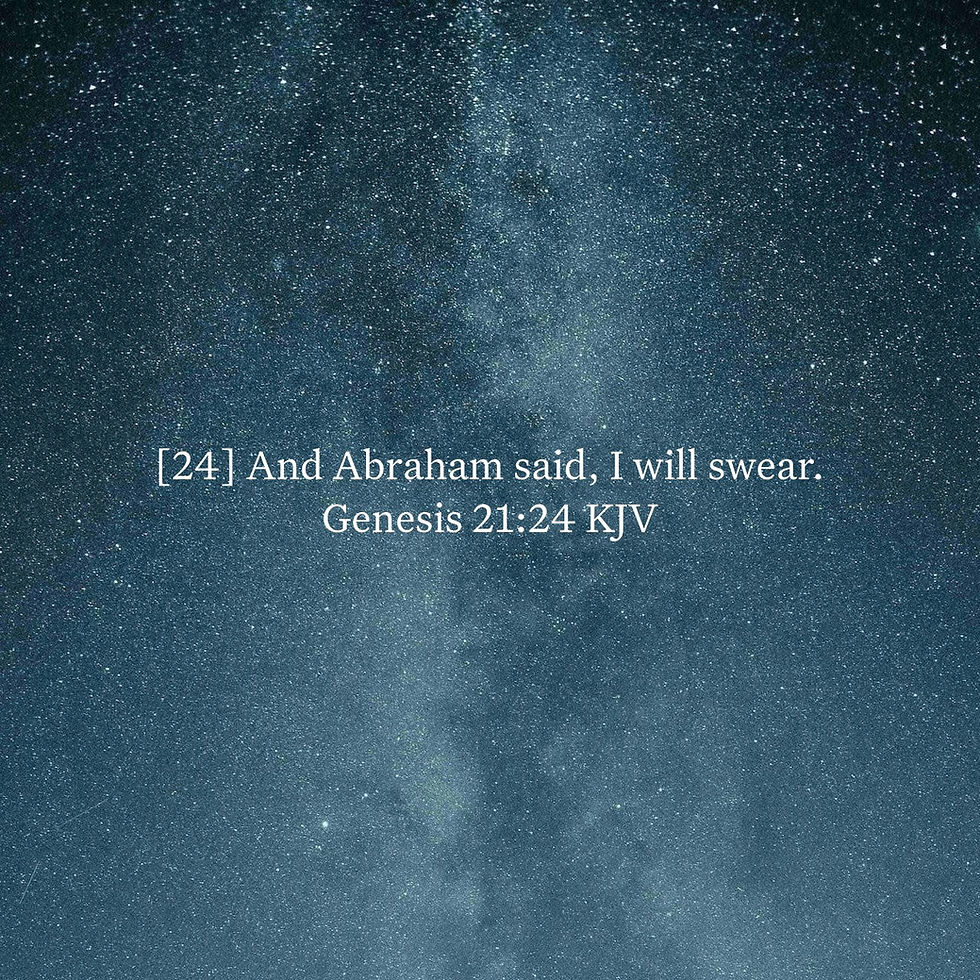
“And Abraham said, I will swear.”
Six words. That is all it takes to convey a decision that reverberates through history, a choice that embodies faith, integrity, and devotion. At first glance, these words seem almost minimal, so short that one might think there is little to reflect upon. Yet within their brevity lies profound depth, revealing the heart of Abraham and, through him, a glimpse of God’s design for humanity.
When Abraham says, “I will swear,” he is exercising the freedom that God has given every human being: the freedom to choose. In a world fraught with imperfection, where sin, pride, fear, and selfish ambition constantly seek to dominate our hearts, the act of choosing rightly becomes a sacred exercise of liberty. Abraham is not perfect, he has doubts, fears, and limitations but here he demonstrates that imperfection does not preclude obedience, nor does it prevent one from acting in faith and love. He models the divine truth that God does not demand perfection; He desires intentional, faithful choices.
This freedom to choose love and integrity is central to God’s creation. From the beginning in the Garden of Eden, humanity was endowed with the power of choice. Adam and Eve were free to obey or to rebel, to trust God’s wisdom or pursue their own desires. God did not create robots or programmed beings; He created moral agents capable of love, capable of relational faithfulness. Abraham’s six words are a microcosm of this divine intention. In choosing to swear, he is aligning his will with God’s purposes, choosing loyalty over expedience, faithfulness over self-interest, and covenantal love over fleeting gain.
Importantly, this choice occurs in the context of power and temptation. Abraham has just been offered the spoils of war by the king of Sodom. He could have accepted wealth, fame, or influence, and the world would have applauded him. Yet Abraham exercises his freedom to choose love for God and justice for humanity over selfish gain. His decision reminds us that love is rarely convenient. Love is often an act of deliberate commitment in the midst of a world that rewards compromise and self-interest. Choosing love in an imperfect world requires courage, discipline, and vision. It demands that we see beyond the immediate rewards and align ourselves with eternal values.
Abraham’s choice also illuminates the relational heart of God’s plan. To swear is to make a pledge not only to a person but ultimately to God Himself. Our choices, especially those made in love and integrity, have ripple effects that extend far beyond our own lives. Abraham’s oath is a tangible exercise of his freedom as he commits to truth, justice, and fidelity, recognizing that every human act carries moral and spiritual consequences. God’s Kingdom is built on such choices. Every act of love, every word of truth, every decision to uphold integrity in the face of temptation is a declaration of God’s sovereignty in our lives.
Furthermore, Abraham’s act teaches us that freedom and responsibility are inseparable. True freedom is not the liberty to do whatever we want, but the capacity to act in alignment with God’s will, even when the world offers more tempting alternatives. Choosing love in an imperfect world requires wisdom to discern right from wrong, courage to act faithfully when it is difficult, and humility to recognize that our strength comes from God. Abraham demonstrates that the most profound acts of freedom are exercised not for self-aggrandizement but for obedience, faith, and covenantal fidelity.
We also see in Abraham a mirror of our own struggles. How often do we face moments where selfish gain, fear, or pride beckons us, promising satisfaction or security? Yet in those moments, God calls us to choose differently: to act with love, to honor Him, to commit to what is right even when it costs us. Abraham’s “I will swear” becomes a model for navigating our own imperfect world. His brevity is instructive, he does not over-explain or rationalize; he simply chooses rightly. Love, at its core, is often a quiet, decisive act that requires surrender to God’s will.
In a world marked by brokenness, conflict, and moral ambiguity, Abraham reminds us that our freedom is a sacred gift. We are not bound by the imperfections around us; we are free to choose faithfulness, integrity, and love. Each choice, no matter how small or seemingly inconsequential, participates in God’s larger plan. Each act of love, obedience, and righteousness echoes eternity. Abraham’s six words demonstrate that even in the midst of uncertainty and temptation, humans can respond rightly when guided by faith and the desire to honor God.
Finally, these six words reveal that God’s design for humanity is relational at its core. We are created to interact, to covenant, to commit, to love, and to choose the good even when we are flawed. Abraham’s choice shows that perfection is not the prerequisite for God’s blessings, faithful decision-making is. Love is always an act of the will, and freedom is only meaningful when exercised responsibly. God gives us the freedom to love, to obey, and to swear fidelity to Him, knowing that our choices reflect our hearts and our alignment with His purposes.
In sum, “I will swear” is far more than a legalistic statement. It is a window into the profound freedom God grants us to love and to act rightly in a world full of imperfection. Abraham’s response captures the essence of what it means to be human: imperfect yet capable of faithfulness, limited yet capable of obedience, fallible yet capable of love. These six words teach us that our choices matter. They remind us that God desires not mere compliance but hearts that freely choose to love Him, honor His will, and uphold righteousness even in a world that often celebrates compromise and self-interest.
Abraham’s oath stands as a timeless call: in every situation, in every trial, in every moment of temptation or opportunity, we are free to choose love. And when we do, even in our imperfection, we participate in God’s eternal plan, reflect His glory, and live as He intended His creation to live: in covenant, in faith, and in freely chosen love.
If you would like to explore Genesis in a sustained, verse-by-verse way with space to reflect, journal, and trace how these foundational truths unfold through Scripture the Verse by Verse book expands these reflections into a unified reading experience. The book gathers these meditations into a structured journey through Genesis, designed to help readers linger in the text and engage God’s Word more deeply over time.


Comments