Genesis 21:8 Daily Devotional & Meaning – Isaac Was Weaned, Abraham’s Great Feast, and God’s Sustaining Faithfulness

Daily Verses Everyday! Day 88
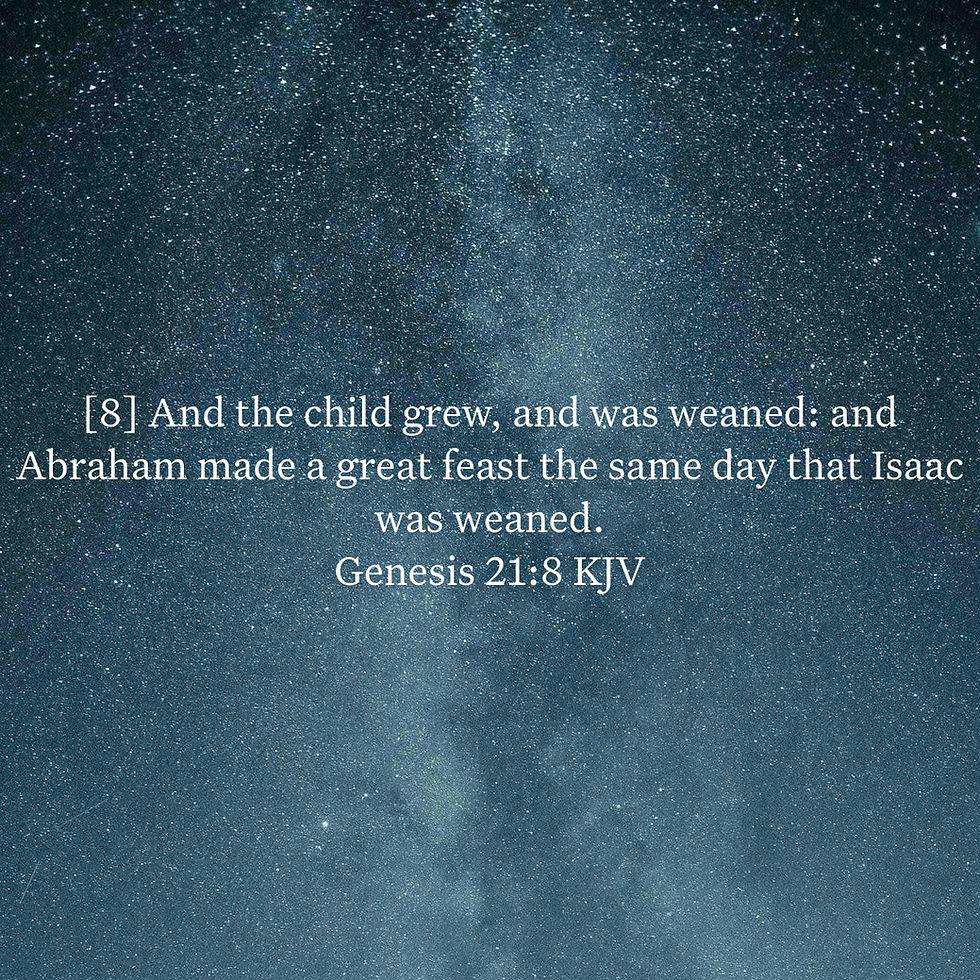
“And the child grew, and was weaned: and Abraham made a great feast the same day that Isaac was weaned.”
At first glance, Genesis 21:8 can feel like a simple narrative transition, one more verse marking the passage of time in a child’s life. Yet when Scripture pauses to note that Isaac was weaned and that Abraham celebrated this moment with a great feast, it signals that something far more significant is taking place. In the biblical world, weaning was not merely a biological milestone. It was social, covenantal, theological, and symbolic of survival, blessing, and divine faithfulness.
To understand what “being weaned” means, we must first step into the ancient Near Eastern context. Unlike in the modern world, where infants are typically weaned within the first year, children in Abraham’s time were often nursed for two to three years, sometimes longer. Breastfeeding was essential not only for nutrition but for survival. Clean water was scarce, alternatives to breast milk were dangerous, and infant mortality was high. Reaching the point of weaning meant that a child had survived the most fragile years of life. To say “the child grew, and was weaned” is to say that Isaac lived. He endured. He passed the threshold where death so often claimed the young.
This is why Abraham’s response is so striking. He does not mark Isaac’s birth with a feast of this magnitude; he marks his weaning. The feast is not merely about joy in a child, it is gratitude for preservation. Isaac’s weaning is a declaration that God has not only given life but sustained it. The promise made to Abraham has moved from miracle conception to miracle continuation.
Weaning also represents a shift in dependency. While Isaac remains a child under his parents’ care, he is no longer sustained solely by his mother’s body. This transition matters deeply in the biblical imagination. It marks the first step toward independence and participation in the wider household. Isaac is moving from exclusive intimacy with Sarah to a broader place within Abraham’s family and future inheritance. In this sense, weaning is not separation from love, but expansion into purpose.
Spiritually, this transition mirrors the way God works with His people. God often begins by sustaining us in ways that are deeply intimate and hidden, much like an infant at the breast. But growth eventually requires transition. Weaning is not abandonment; it is maturation. The child does not lose provision, he receives it in a new form. This echoes a recurring biblical pattern: God remains faithful even as the form of His provision changes.
Theologically, Isaac’s weaning carries covenantal weight. Isaac is not just any child; he is the child of promise. His survival to weaning age confirms that the covenant God established with Abraham is active and unfolding. The feast Abraham prepares is therefore not simply paternal pride but covenantal celebration. It is an act of public acknowledgment that God’s promise is no longer merely spoken but it is embodied in a living, growing child.
In ancient cultures, feasts were communal and declarative. To hold a “great feast” was to invite witnesses. Abraham’s celebration is a testimony. He is, in effect, proclaiming to his household and community: This child lives by God’s hand. Isaac’s weaning becomes a visible sign that God’s blessing is not fleeting. What God begins, He sustains.
There is also a profound contrast embedded in this moment when we consider Sarah’s past barrenness. The same woman who once could not conceive now nurses long enough for her child to reach weaning age. Her body not only gave birth but provided sustained nourishment over years. Weaning therefore stands as the completion of a miracle cycle.from impossibility, to promise, to fulfillment, to endurance. God’s faithfulness spans the entire process.
The phrase “the child grew” is equally important. Growth in Scripture is rarely neutral. It implies health, favor, and divine blessing. Growth precedes weaning, reminding us that maturity is gradual. Isaac does not leap from birth to independence; he grows steadily under care. This reflects God’s patience. The covenant is not rushed. God allows time, development, and strengthening before further demands are placed upon the child or the promise.
Finally, Isaac’s weaning foreshadows future biblical themes. Later in Scripture, weaning becomes a metaphor for spiritual maturity. The psalmist writes of a soul being “like a weaned child with its mother” in Psalm 131:2, describing peace, trust, and contentment rather than frantic dependence. Isaac’s weaning points not to loss, but to settled confidence, life no longer fighting merely to survive, but beginning to flourish.
In Genesis 21:8, weaning means survival, growth, transition, and testimony. It marks the moment when God’s promise proves durable over time. Abraham’s feast is therefore entirely fitting. He is celebrating not just a milestone in his son’s life, but the faithfulness of a God who gives life, sustains it, and carries His promises beyond their most vulnerable beginnings.
If you would like to explore Genesis in a sustained, verse-by-verse way with space to reflect, journal, and trace how these foundational truths unfold through Scripture the Verse by Verse book expands these reflections into a unified reading experience. The book gathers these meditations into a structured journey through Genesis, designed to help readers linger in the text and engage God’s Word more deeply over time.


Comments