
Genesis 17:13 Daily Devotional & Meaning – God’s Covenant in the Flesh, Household Inclusion, and the Seeds of Redemption

Daily Verses Everyday! Day 73
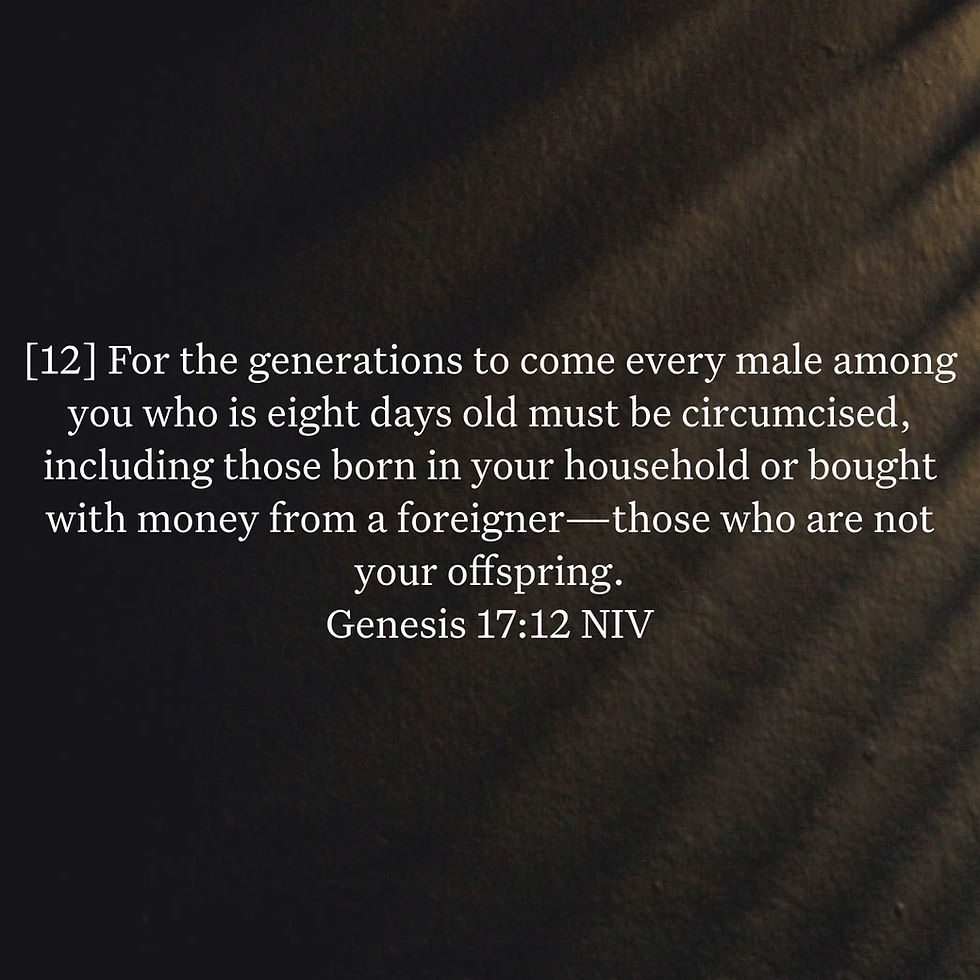
“He that is born in thy house, and he that is bought with thy money, must needs be circumcised: and my covenant shall be in your flesh for an everlasting covenant.”
This verse presses deeper into the uncomfortable but unavoidable reality of the ancient world: slavery existed, and God’s covenantal command extended even into that broken human structure. When the text says, “He that is born in thy house, and he that is bought with thy money,” it is describing the full household of those Abraham fathered biologically and those who were part of his household through economic and legal means. What’s striking is not that slavery is present in the story but that the covenant of God is not restricted to the privileged, the powerful, or the free. Even those society considered property were brought into the circle of divine blessing and responsibility. In the ancient Near East, slaves were normally excluded from religious rites, but here, God includes them. That inclusion itself quietly undermines the worldview that a slave is less than human.
Some people stumble here and accuse Scripture of endorsing slavery. But that misunderstands both the text and the trajectory of Scripture as a whole. God does not command Abraham to enslave anyone, nor does He celebrate slavery as good. Instead, the text reflects the world as it was—fallen, messy, structured by sin—and shows God beginning the long process of reshaping human moral consciousness. We see this pattern throughout Scripture: God often enters a broken system not by instantly erasing it but by planting truth inside it until the system can no longer sustain itself. In this case, the truth planted is this: a slave is a bearer of the covenant, marked in the same flesh as the patriarch himself. The sign placed on Abraham is placed on the slave. The dignity God gives to Abraham is something that He also gives to the lowest member of his household.
This is the same movement behind the Exodus story: God hears the cry of slaves and shatters the most powerful empire in the world to free them. It is the same movement Christ completes when He declares in John 8:36, “If the Son therefore shall make you free, ye shall be free indeed,” and when the early church, against all cultural norms, affirms that in Christ, there is “neither slave nor free.” So even here, in the earliest stages of God’s covenant dealings, we see the seeds of liberation taking root, seeds that will one day overturn slavery entirely.
But beyond the social dimension, the verse carries a deep theological weight. God is saying: My covenant is not something you keep at arm’s length. It is something that marks your very being. “My covenant shall be in your flesh”—that is intimate, unavoidable, permanent. Every man in Abraham’s household carried the reminder on his own body that he belonged to God, that he was not autonomous, self-made, or self-owned. And in the ancient world, the household was seen as a single unit under one head. So God marks not just Abraham but everyone under his authority, signaling that His covenant extends beyond the individual to the community.
In this way, circumcision was more than a ritual; it was a declaration of identity. Whether one was born naturally into the household or grafted in from the outside, the covenant placed them under the same spiritual covering. God was knitting together a people, not just a bloodline. This is profoundly foreshadowing the later inclusion of Gentiles into the faith through Christ. Paul will say in Romans and Galatians that what circumcision symbolized of being set apart for God is now fulfilled spiritually in every believer, regardless of ethnicity or social status. In that sense, this verse is an early whisper of the Gospel: the covenant family will always be bigger than flesh, tribe, and lineage.
It also reminds us that God’s covenant demands something. It is not cheap grace. To be marked by God is to surrender autonomy and to live as one who belongs to Him. While circumcision itself is no longer the sign for Christians, the principle remains God’s covenant presses into the deepest, most personal parts of our identity. It shapes our desires, decisions, bodies, and loyalties. It is not merely a symbol we wear externally but a truth engraved into who we are. God’s covenant is not casual; it is “everlasting,” reaching across generations, shaping families, households, and communities.
So verse 13 calls us to see both the cost and the inclusiveness of God’s covenant. No one is too low to be included, and no one is too important to be unmarked. God takes the broken structures of humanity and begins His redeeming work from the inside out, marking, shaping, transforming until His people—once fragmented and bound to sin—to become a unified household belonging wholly to Him.
If you would like to explore Genesis in a sustained, verse-by-verse way with space to reflect, journal, and trace how these foundational truths unfold through Scripture the Verse by Verse book expands these reflections into a unified reading experience. The book gathers these meditations into a structured journey through Genesis, designed to help readers linger in the text and engage God’s Word more deeply over time.


Comments