
Genesis 17:2 Daily Devotional & Meaning – God’s Covenant, True Identity, and the Faithfulness of El Shaddai

Daily Verses Everyday! Day 71
“And I will make my covenant between me and thee, and will multiply thee exceedingly.”
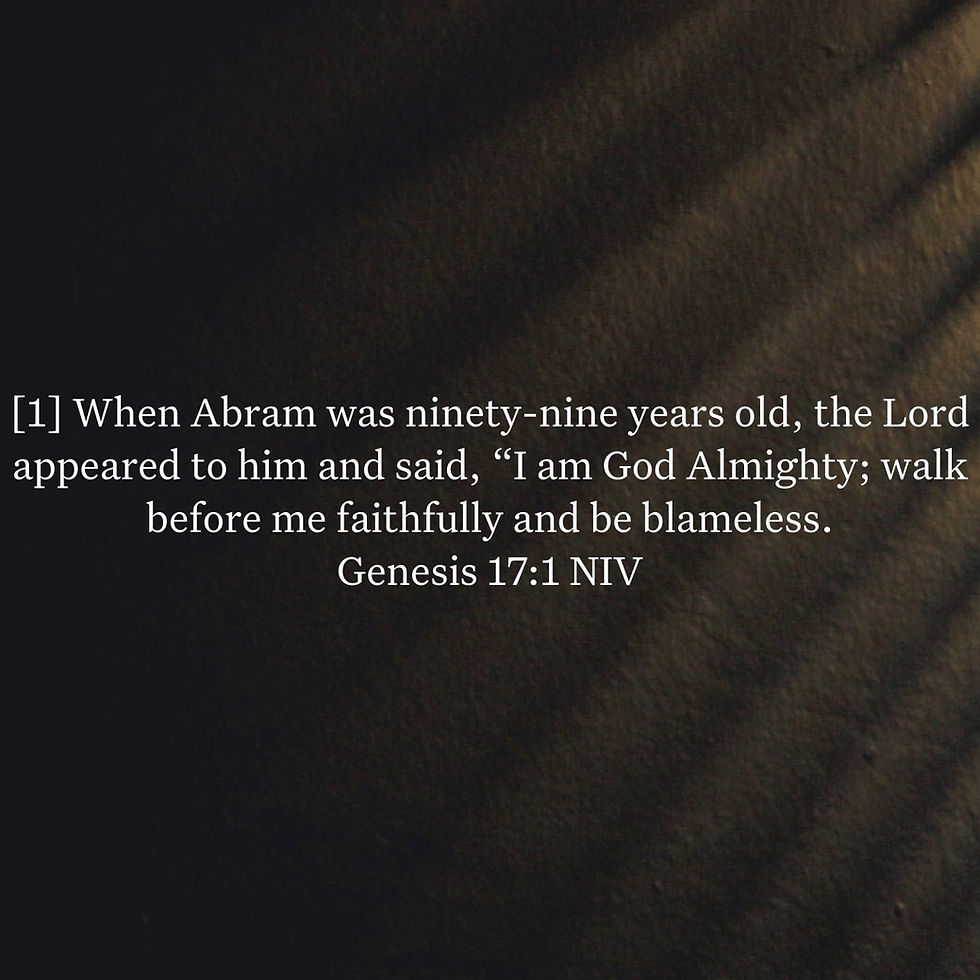
Here again, God reassures Abram that His promise still remains. This tells us a great deal about who our God is. He brings Himself down to the level of human frailty, knowing that we are creatures who need reassurance, even though He Himself needs nothing, fears nothing, and forgets nothing. God does not repeat Himself because He is unsure; He repeats Himself because we are. In this moment, when Abram is 99 years old and still waiting on a promise first spoken decades earlier, God meets him with tenderness. He does not rebuke Abram for struggling to understand how the promise will come to pass. Instead, He reaffirms, “I will make my covenant between me and thee.”
This is not merely a reminder; it is a deepening of the relationship. God is not only repeating the covenant; He is intensifying it. The Hebrew wording suggests a strengthening or establishing of what began long ago in Genesis 12. God is taking the covenantal foundation and building upon it, solidifying Abram’s identity, purpose, and destiny. God makes it clear that the covenant is not dependent on Abram’s perfect performance but on His unwavering faithfulness. The covenant exists because God initiated it, and it will be fulfilled because God Himself maintains it.
This lesson is actually quite important for us to understand in today’s society, because we live in a world that constantly tells us the opposite of what God told Abram. Today, our worth is often measured by the things we do, the accomplishments we achieve, the image we present, and the possessions we accumulate. Our culture tries to convince us that identity is something we must create like a self-made project crafted out of personal preference, social approval, and external success. We are told to “define ourselves,” “reinvent ourselves,” and “decide who we want to be.” But all of that stands in direct contrast to what God reveals in His covenant with Abram.
But if God made us, and Scripture declares that He did, then He knows our identity far better than we know our own. We do not create ourselves; we are created. We do not design our purpose; we receive it. Identity is not a product of self-invention but of divine intention. When God speaks into Abram’s life and reaffirms the covenant, He is doing more than making promises, He is shaping Abram’s identity. God is saying, “Your story is rooted in Me. Your future is determined by My faithfulness. Your identity flows from My covenant.”
And this is not only true for Abram; it is true for every image-bearer of God.
If we go back to Genesis 1 and 2, we find that humanity was created for one primary purpose: to experience the love, presence, and fellowship of God. Adam and Eve were made in God’s image, meaning their identity was derived from Him, not from themselves. Before they had a job, possessions, or achievements, God loved them. Their worth came from their Creator, not their contribution.
But something crucial happened in Genesis 3: humanity sought to define itself apart from God. The serpent’s temptation was, “You shall be like God,” which in other words mean “You can define yourself. You can chart your own identity. You can be the master of your own destiny.” And in that moment, the human race detached its understanding of identity from the One who gave it.
This is the root of every identity struggle we see today.
When humans attempt to determine who they are apart from God, confusion is inevitable. We start to build identities around things that were never meant to carry such weight: careers, appearance, relationships, sexuality, politics, preferences, achievements, trauma, or even our failures. None of these are stable foundations. None of them are eternal. None can tell us who we truly are, because none of them created us.
But God did.
And this is where the story of Abram becomes so relevant to our lives today. Abram’s identity was not based on what he could do, especially at 99 years old when he had nothing left to offer in terms of strength or ability. His identity was grounded solely in God’s covenant.
This becomes even clearer in the New Testament, where we learn that Abram’s faith is the prototype of Christian identity. Paul tells us that those who believe in Christ are the true children of Abraham in Galatians 3:7, heirs according to the promise in Galatians 3:29, and participants in the same covenantal blessing. And here is the crucial truth:
Just as Abram’s identity was rooted in God’s promise, so too is our identity rooted in Christ’s finished work.
When we talk about identity in Christ, we are not using Christian clichés or shallow language. We are speaking of the deepest, truest reality of who we are as redeemed human beings. Our identity in Christ is not symbolic; it is covenantal. It is the New Covenant, sealed by the blood of Jesus, that declares who we are in God’s eyes.
Consider how the New Testament describes those who belong to Christ.
2 Corinthians 5:17 says that we are a new creation.
This means that our past does not define us. Christ does.
John 1:12 says that we are children of God.
We are not slaves, not outsiders, but sons and daughters of the living King.
1 Peter 2:9 says that we are chosen, royal, holy, and beloved .
This means that our identity rooted not in performance but in divine election.
Romans 5:1 says that we are justified.
This means that we are declared righteous by God’s own verdict.
Ephesians 1:7 says that we are redeemed.
This means that we were bought at a price.
Ephesians 1:6 says that we are accepted in the Beloved.
We are not tolerated but welcomed. Delighted in. Loved.
Ephesians 1:13 says that we are sealed with the Holy Spirit.
Our identity is secured by God Himself.
Ephesians 2:10 says that we are God’s workmanship.
This tells us that our identity is His masterpiece, not our project.
Colossians 2:10 sats that we are complete in Christ.
We are lacking nothing essential for life or godliness.
Romans 8:17 says that we are co-heirs with Christ.
This is saying that we will share in His inheritance, glory, and eternal life.
When you take all this together, the conclusion becomes overwhelming
Our true identity is not discovered but received.
It is not achieved but bestowed.
It is not built; it is gifted by grace.
Just as Abram did not earn his covenant identity, we do not earn our identity in Christ. It is grounded in God’s unchanging faithfulness. This is why the covenant with Abram is such a powerful picture of the Gospel: it shows that identity begins with God’s promise, not human effort.
And this is why drawing near to God is the only way to discover who we truly are. The closer we get to Him, the more the false identities fall away, the more we understand His character, and the more we understand our calling. The more we experience His love, the more we realize that our worth has never been tied to what we do but to who we belong to.
In a world shouting, “Define yourself,” God whispers, “Come to Me, and I will tell you who you are.”
In Christ, the question “Who am I?” finally receives a clear and eternal answer.
You are Mine.
If you would like to explore Genesis in a sustained, verse-by-verse way with space to reflect, journal, and trace how these foundational truths unfold through Scripture the Verse by Verse book expands these reflections into a unified reading experience. The book gathers these meditations into a structured journey through Genesis, designed to help readers linger in the text and engage God’s Word more deeply over time.


Comments