Genesis 17:1 Daily Devotional & Meaning – El Shaddai, Walking Before God, and Wholehearted Faith

Daily Verses Everyday! Day 71
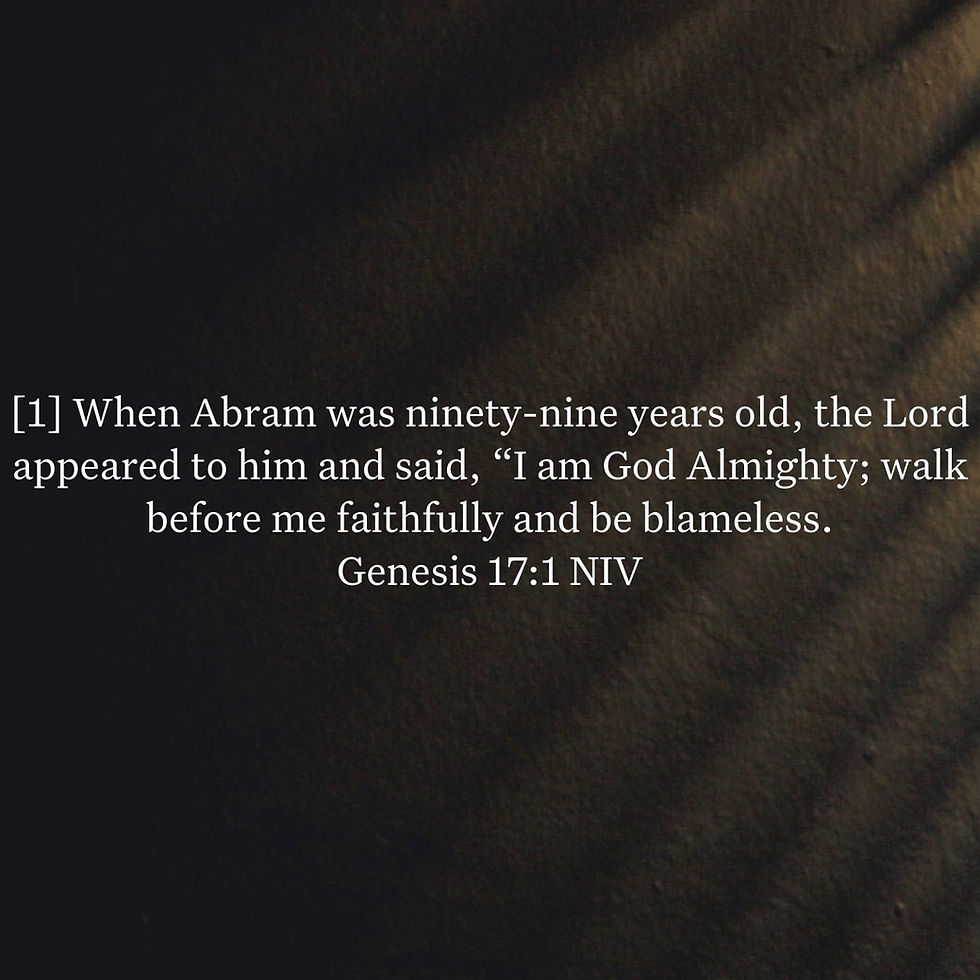
“And when Abram was ninety years old and nine, the LORD appeared to Abram, and said unto him, I [am] the Almighty God; walk before me, and be thou perfect.”
Genesis 17 opens with a thunderclap of divine revelation. Thirteen silent years have passed since the birth of Ishmael. Ishmael was born when Abram was 86; now Abram is 99 years old. For over a decade, Scripture records no visions, no direct words from God, no covenant expansions—only silence. During that silence, Abram raised Ishmael, lived life, tended flocks, and most likely wondered when God’s promised heir would come. Would Ishmael be that heir? Had God’s plan shifted? Did Abram’s mistake in Genesis 16 derail anything? The long gap prepares us for the weight of this moment: “And when Abram was ninety years old and nine, the LORD appeared to Abram…”.
God breaks the silence with both reassurance and command. He begins not by talking about Abram but by revealing Himself: “I [am] the Almighty God.” In Hebrew, this title is El Shaddai. This is the first time in Scripture that God uses this name. Whenever God introduces a new name for Himself, it is never random because it always matches the moment. El Shaddai conveys overwhelming power, complete sufficiency, and absolute authority. It is the God who is able to bring life from barrenness, hope from impossibility, and fulfillment from promises long delayed. Abram’s body is as good as dead. Sarah’s womb is barren. Humanly speaking, the promise of a natural-born son is impossible. But impossibility is the canvas on which El Shaddai paints His glory.
God reveals His identity before giving His instruction. This is a pattern seen throughout Scripture. God never calls His people to obedience without grounding them in who He is. Abram is not told to “walk before God” in his own strength; he is told to walk before El Shaddai, the all-powerful, all-sufficient One. Only after declaring His nature does God speak His command: “walk before me, and be thou perfect.”
The phrase “walk before me” carries the idea of living one’s entire life in the constant awareness of God’s presence. It means to orient every step—public, private, emotional, spiritual, relational—under the gaze of God. It is a call to transparency, integrity, and trust. For Abram, this involved surrendering his own understanding of how God would fulfill His promise. It meant letting go of what was birthed through human effort (Ishmael as a product of Sarai’s plan) and embracing what could only be birthed by divine power.
The second command, “be thou perfect,” does not indicate sinless perfection. The Hebrew translation uses the word tamim, meaning “whole, complete, undivided, blameless.” God is calling Abram to wholehearted devotion. For decades, Abram believed God, but his faith was mixed at times with human reasoning and shortcuts. Now, standing on the threshold of the covenant’s fulfillment, God calls Abram to a deeper level of surrender. This is the same word later used to describe the Passover lamb—without blemish, whole, complete. God is commanding Abram to give Him a whole heart, not a divided one.
Notice when God calls Abram to this deeper faith: in old age, when the promise seems late, when the natural hope is gone, when his body is failing. God often waits until human strength collapses so that His strength is unmistakable. Abram at 99 is the perfect vessel for God’s power.
This moment in Genesis 17 is a turning point in the entire Bible. Abram is about to receive a new name, a covenant of circumcision, and the long-awaited promise that the child of the covenant will come through Sarai herself. But before any of that is revealed, God does something more important: He re-centers Abram’s gaze on who He is. The command to “walk” and “be whole” is rooted in one truth: El Shaddai is enough.
In the timeline of human creation, Adam at 0 HC, Seth at 130 HC, and the unfolding genealogy, Abram now stands around 2,347 HC, carrying the covenantal line through which God will bless all nations. And at this critical moment in redemptive history, God’s call is first about relationship, not about nations, land, or legacy. It is as if He is saying, “Walk with Me. Live before Me. Be wholly Mine.”
This verse teaches us that God begins His greatest works in us by first reminding us who He is. When we know Him as El Shaddai, obedience becomes possible, surrender becomes joyful, and faith becomes anchored not in what we see but in the One who reigns over every impossibility.
If you would like to explore Genesis in a sustained, verse-by-verse way with space to reflect, journal, and trace how these foundational truths unfold through Scripture the Verse by Verse book expands these reflections into a unified reading experience. The book gathers these meditations into a structured journey through Genesis, designed to help readers linger in the text and engage God’s Word more deeply over time.


Comments