
Genesis 17:21 Daily Devotional & Meaning – Isaac, God’s Appointed Time, and the Certainty of His Covenant

Daily Verses Everyday! Day 73
“But my covenant will I establish with Isaac, which Sarah shall bear unto thee at this set time in the next year.”
Genesis 17:21 marks a critical moment in the unfolding of God’s covenantal plan. God is not only clarifying the line through which His promises will be fulfilled but also demonstrating His perfect knowledge, faithfulness, and sovereignty over time itself. Based on the timeline traced from Adam through Abram, we can see the incredible precision of God’s promise. Abram was born in 1948 HC, and Ishmael, born when Abram was 86, came into existence in 2034 HC. God declares that Isaac will be born at “this set time in the next year,” meaning one year after His promise, when Abraham is 100 years old. Through simple calculation, this places Isaac’s prophesied birth in 2048 HC. This level of temporal specificity reveals not only God’s omniscience but also His unwavering commitment to His promises. God is not making a vague suggestion; He is announcing a precise, divinely appointed moment in history for the covenant to advance.
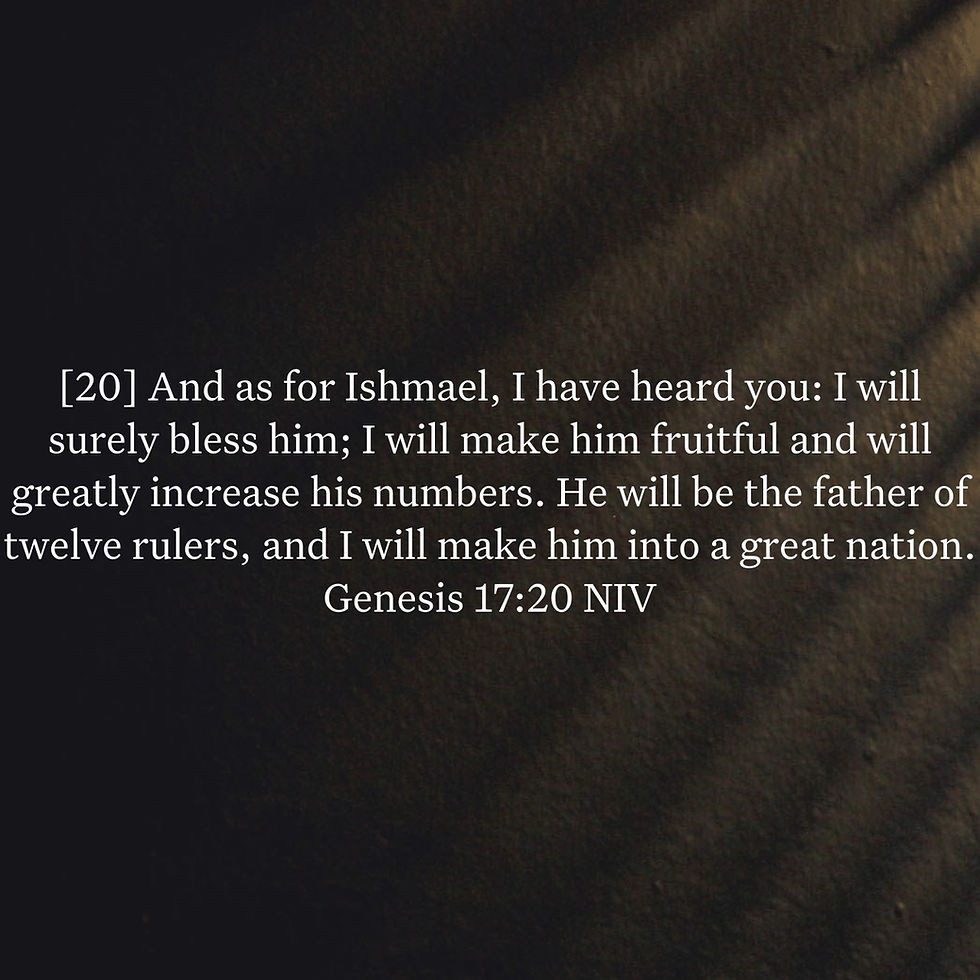
The covenantal significance of Isaac’s birth cannot be overstated. Isaac is the child of promise, the vehicle through which God’s covenant with Abraham will continue. While Ishmael is blessed and becomes a fruitful nation, the covenant itself—like its theological, redemptive, and eternal weight—passes through Isaac. This distinction emphasizes that God’s plans are always intentional. Nothing is accidental, and no human assumption can alter the unfolding of His will. Abraham’s human reasoning favored Ishmael, the tangible and present son, but God operates on the plane of the miraculous, beyond the constraints of biology and human expectation. Isaac’s birth at the appointed time is a testament to God’s faithfulness: He accomplishes His promises exactly as declared, demonstrating that His word is true, reliable, and trustworthy.
The certainty of God’s promises is also directly linked to the biblical principle regarding the discernment of spirits. In 1 John 4:1, believers are instructed: “Beloved, believe not every spirit, but try the spirits whether they are of God: because many false prophets are gone out into the world.” One of the key ways to discern a true spirit is through the fulfillment of prophecy. If a prophecy is spoken and comes to pass exactly as declared, it demonstrates that the spirit who spoke it is of God. In the case of Isaac, God Himself declares the prophecy of his birth at a precise time. When that prophecy comes to pass in 2048 HC, it validates the divine source of the message. This principle reassures us that God’s covenant is grounded in His omniscience and confirms that His promises are trustworthy. Abraham’s faith is tested, not by the impossibility of God’s word but by the challenge of believing in what the human eye cannot yet see. The fulfillment of prophecy acts as the ultimate proof of God’s faithfulness and the reality of His Spirit.
Moreover, this verse teaches a profound lesson about divine timing. God’s promises are never early, never late, but always perfectly timed. The delay between Ishmael’s birth and Isaac’s prophesied birth emphasizes the distinction between human expectation and divine orchestration. God’s timing often requires patience, trust, and a willingness to wait on His wisdom. Abraham’s journey illustrates this beautifully: his life intersects with God’s covenantal plan in ways that cannot be predicted by human logic. Every detail, from the ages of the patriarchs to the exact year of Isaac’s birth, falls within God’s sovereign plan, showing that nothing is random and nothing is outside His control.
Genesis 17:21 also challenges us personally. Like Abraham, we often focus on what seems immediately available or “practical” in our lives, trying to direct God’s plan according to human reasoning. Yet God calls us to trust in His timing, believe in the promises He speaks, and recognize that His covenantal faithfulness is unshakable. Just as Abraham ultimately witnessed the fulfillment of Isaac’s birth at the precise appointed time, we too can rest in the certainty that God’s Word and the prophecies He speaks will come to pass. His Spirit is faithful to uphold His promises, and His covenant endures through the ages.
In conclusion, Genesis 17:21 reveals God’s perfect timing, His covenantal fidelity, and His unerring knowledge of history. Isaac’s birth is a divine act of promise fulfilled, a prophecy coming true, and a confirmation that God’s Spirit works faithfully to bring about His eternal plans. Believers today can draw confidence from this example, knowing that the Spirit who speaks truth and prophecy is to be trusted, and that God’s covenant promises will always come to pass in the fullness of His appointed time.
If you would like to explore Genesis in a sustained, verse-by-verse way with space to reflect, journal, and trace how these foundational truths unfold through Scripture the Verse by Verse book expands these reflections into a unified reading experience. The book gathers these meditations into a structured journey through Genesis, designed to help readers linger in the text and engage God’s Word more deeply over time.


Comments