
Genesis 21:13 Daily Devotional & Meaning – Ishmael, God’s Promise to Make a Nation, and His Care Beyond the Covenant Line

Daily Verses Everyday! Day 88
“And also of the son of the bondwoman will I make a nation, because he is thy seed.”
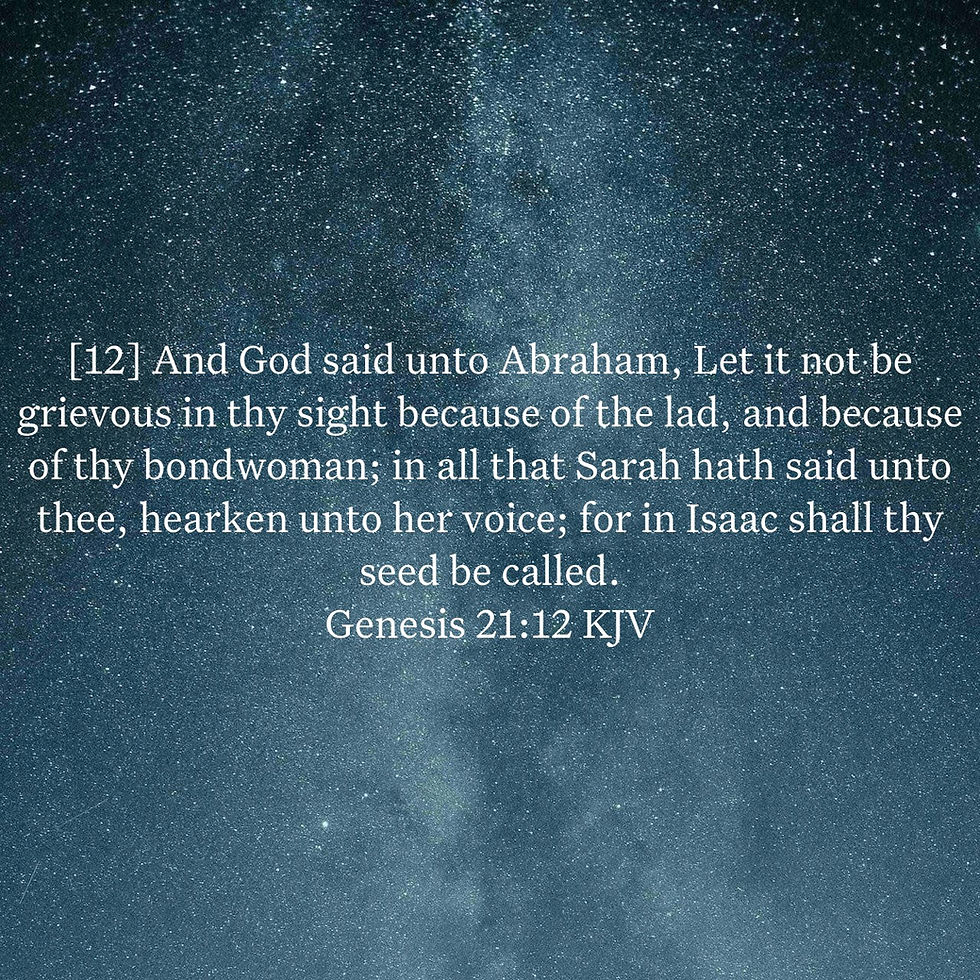
Genesis 21:13 is one of the most profound and, in some ways, misunderstood verses in the Abrahamic narrative. It follows the emotional tension of verses 11 and 12, where Abraham is deeply grieved over Ishmael and Hagar, and God reassures him that His covenantal plan through Isaac will proceed. Verse 13 introduces a critical dimension: Ishmael, though not the child of the covenant, is not abandoned. God declares, “And also of the son of the bondwoman will I make a nation, because he is thy seed.” In this statement, several key truths converge: God honors Abraham’s love for Ishmael, acknowledges the legitimacy of Ishmael’s existence, and promises that Ishmael himself will become the progenitor of a great nation.
The verse is remarkable for its dual focus. While Isaac carries the covenantal blessing that will culminate in the line of the Messiah, Ishmael is also given a tangible and enduring promise. This illustrates a broader biblical principle: God’s plans often work on multiple levels. The covenant does not negate His care for those outside the covenant line; it simply channels His redemptive purpose through specific paths. Ishmael’s future is not a secondary or incidental detail for it is a concrete expression of God’s faithfulness and His respect for Abraham’s role as a father.
Understanding Ishmael’s place in biblical history provides insight into both historical and contemporary identities. Ishmael is traditionally recognized as the first son of Abraham, born to Hagar, Sarah’s Egyptian handmaid, due to Sarah’s initial barrenness. Scripture explicitly calls him Abraham’s seed, emphasizing both biological and spiritual connection. God does not diminish Ishmael’s significance even though the covenant will pass through Isaac. This underscores a truth that resonates with the moral fabric of God’s justice: every human life has purpose, even outside the primary covenantal line.
From a historical perspective, the descendants of Ishmael are understood to have settled in the regions of the Arabian Peninsula, particularly in the area extending from the Sinai Desert toward northern Arabia. Biblical genealogies trace Ishmael’s twelve sons, who became princes of twelve tribes, laying the foundation for numerous nomadic and settled communities. While the Bible does not explicitly equate Ishmael’s line with modern nations, later historical and cultural traditions, especially within Islamic narratives, claim Ishmael as the ancestor of Arab peoples. This claim is deeply ingrained in Islamic identity, as the Quran and Hadith highlight Ishmael as a prophet and a forebearer of the Arab lineage, particularly the Quraysh tribe, from which the Prophet Muhammad descended.
The connection between Ishmael and the Palestinian people is more complex and nuanced. Some traditions, both religious and historical, see the broader Arab populations, including many who became part of the region historically called Palestine, as culturally and ancestrally connected to Ishmael. The biblical text itself does not define modern national identities, of course, but the principle in Genesis 21:13 that God would make a nation from Ishmael has been interpreted over centuries as a foundational moment in the lineage of Arab peoples and, by extension, Islamic culture. This interpretation informs how Muslim communities view themselves as spiritually linked to Abraham, not merely through Isaac but also through Ishmael.
Theologically, Genesis 21:13 demonstrates God’s inclusivity and His ability to bless multiple lines of Abrahamic descent simultaneously. While the covenantal promise through Isaac focuses on the Messiah and the ultimate redemptive plan for humanity, Ishmael’s lineage is not abandoned. God’s promise to Ishmael reflects a consistent biblical theme: blessing is not limited by covenant alone. God’s grace operates both inside and outside the covenant, a theme also evident in passages such as Romans 9, where Paul reflects on God’s sovereign choice of Jacob over Esau while affirming the reality and destiny of both lines.
The verse also has significant implications for understanding interfaith relationships. Judaism and Christianity trace covenantal blessing through Isaac, while Islam traces spiritual and genealogical lineage through Ishmael. Recognizing Ishmael as the father of a nation acknowledges the historical and theological legitimacy of those claims. It also provides a framework for understanding the deep-seated connections and tensions between Jewish, Christian, and Islamic narratives. Genesis 21:13 is therefore not merely a genealogical note; it is a theological bridge that validates multiple peoples and cultures as participants in God’s broader plan.
Culturally, Ishmael’s descendants, as understood in Islamic tradition, are associated with the origins of key religious practices and sacred sites, particularly in the Arabian Peninsula. Islamic culture venerates Ishmael as a prophet who, along with Abraham, helped establish the Kaaba in Mecca, which becomes the center of Islamic worship. This intertwining of lineage, religious identity, and sacred geography demonstrates how Genesis 21:13 extends beyond biology into spiritual and cultural legacy. Ishmael is not simply a footnote in Abraham’s story; he is the foundation of a rich civilization, whose faith traditions, moral codes, and cultural practices are, in part, traced back to this promise.
From a practical standpoint, verse 13 also teaches believers about God’s provision for all His children. Even when human decisions or circumstances appear harsh, such as sending Hagar and Ishmael into the wilderness, God ensures their survival, purpose, and prosperity. The wilderness becomes a place of divine protection and expansion, illustrating that God’s care is not restricted by human misunderstanding or societal marginalization. The narrative thus models faith in God’s providence: what seems like exclusion or suffering may be the very avenue through which God fulfills His promise.
Additionally, the verse carries a profound moral and spiritual lesson about parental responsibility and trust. Abraham grieved deeply for Ishmael, yet he obeyed God’s command. His faithfulness, combined with God’s promise, secured a future for Ishmael and his descendants. For modern readers, this is a reminder that loving those entrusted to us often requires surrendering them to God’s wisdom, even when our human instincts resist. God’s blessing is not determined by our ability to control outcomes but by our willingness to trust His plan.
Finally, Genesis 21:13 illustrates a remarkable continuity between biblical prophecy and historical identity. Through Ishmael, God demonstrates that He can work multiple purposes simultaneously: the covenant continues through Isaac, and yet Ishmael becomes the father of a great nation. This principle echoes throughout Scripture: God’s sovereignty is expansive, His blessing abundant, and His care meticulous. Ishmael’s nation, as interpreted through history and Islamic tradition, validates God’s promise and illustrates that human lineage, cultural identity, and divine purpose are intimately connected.
In summary, Genesis 21:13 is a declaration of God’s faithfulness not only to the covenantal line through Isaac but also to Ishmael, Abraham’s firstborn son. It underscores the significance of Ishmael’s lineage, historically and culturally linked to Arab peoples and, by extension, Islamic tradition. God’s promise ensures that even those outside the covenant line are not forgotten. The verse affirms that God’s blessings extend across generations, cultures, and nations, demonstrating His capacity to fulfill multiple purposes simultaneously. For modern readers, the passage reassures that divine providence encompasses all who are loved by God, that grief need not eclipse trust, and that God’s care is sufficient to sustain both the covenantal promises and the lives of those connected to His faithful servants.
If you would like to explore Genesis in a sustained, verse-by-verse way with space to reflect, journal, and trace how these foundational truths unfold through Scripture the Verse by Verse book expands these reflections into a unified reading experience. The book gathers these meditations into a structured journey through Genesis, designed to help readers linger in the text and engage God’s Word more deeply over time.


Comments