
Genesis 25:10 Daily Devotional & Meaning – Abraham and Sarah Buried in the Field of Machpelah

Daily Verses Everyday! Day 116
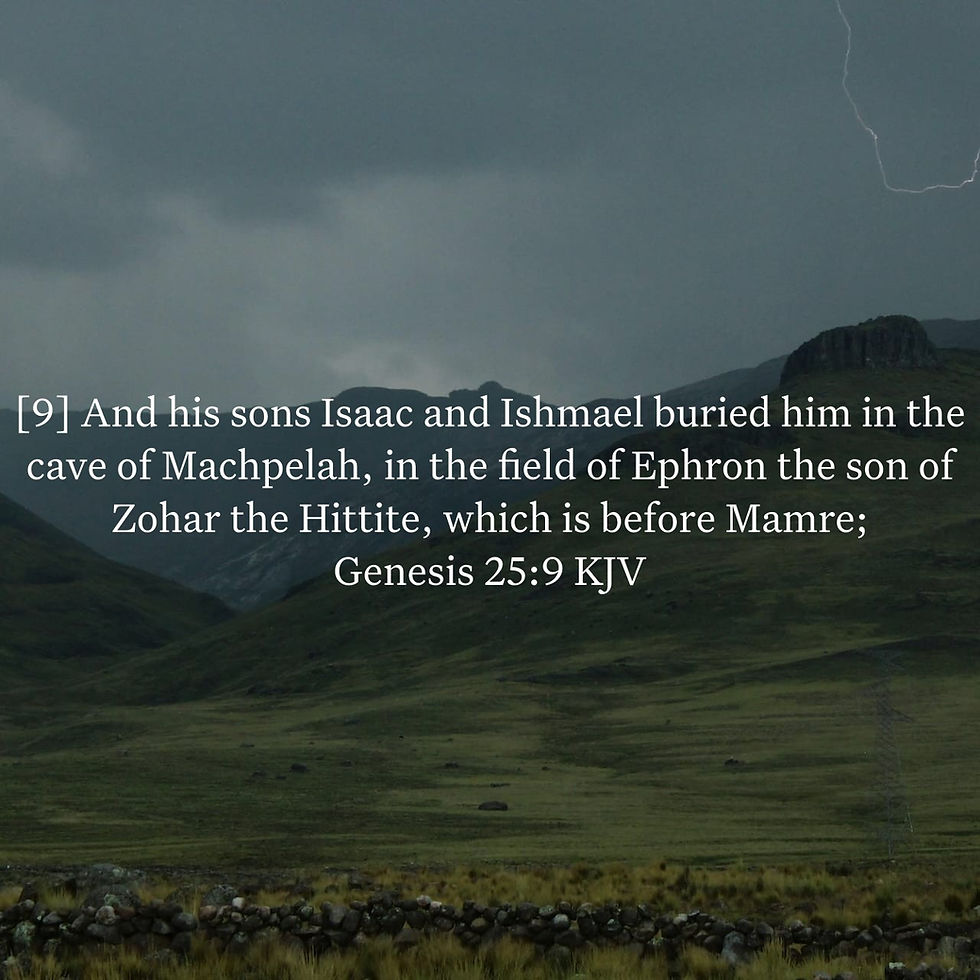
“The field which Abraham purchased of the sons of Heth: there was Abraham buried, and Sarah his wife.”
Genesis 25:10 brings Abraham’s burial to a quiet and meaningful close. The verse says, “The field which Abraham purchased of the sons of Heth: there was Abraham buried, and Sarah his wife.” At first, this may seem like a simple historical note, but it carries deep importance in the story of Abraham. It reminds us where Abraham was buried, who he was buried with, and why that burial place mattered so much in the unfolding plan of God.
Abraham was buried in the field he had purchased from the sons of Heth. This takes us back to Genesis 23, when Sarah died. After Sarah’s death, Abraham went to the children of Heth and asked for a place to bury his wife. Genesis 23:4 records Abraham saying, “I am a stranger and a sojourner with you: give me a possession of a buryingplace with you, that I may bury my dead out of my sight.” That statement is very important. Abraham was living in the land God had promised to give to his descendants, yet he still described himself as “a stranger and a sojourner.”
God had promised Abraham the land of Canaan. In Genesis 12:7, the Lord said, “Unto thy seed will I give this land.” Yet during Abraham’s lifetime, he did not possess the whole land. He lived in it by faith. He moved through it as a pilgrim. He pitched tents, built altars, and trusted God’s promise, but he did not see the full inheritance come to pass in his lifetime. The first piece of the promised land Abraham legally owned was not a palace, a city, or a kingdom. It was a burial field.
That is powerful. Abraham believed God’s promise, but his first possession in the land was a grave. This teaches us that faith often lives between promise and fulfillment. Abraham had the word of God, but he had not yet received everything God had spoken. He had Isaac, but not yet a nation. He had a burial place in Canaan, but not yet the full land. He had the promise that all nations would be blessed through his seed, but he had not yet seen Christ come into the world. Abraham died believing what he had not yet fully seen.
Hebrews 11:13 says, “These all died in faith, not having received the promises, but having seen them afar off.” That describes Abraham and Sarah perfectly. They died in faith. They did not see Israel become a great nation. They did not see Moses lead the people out of Egypt. They did not see Joshua bring Israel into the land. They did not see David sit on the throne. They did not see Jesus Christ born in Bethlehem. Yet they believed God. Their burial in Canaan was a testimony that God’s word was true, even though the full promise would unfold after their deaths.
The verse also says, “there was Abraham buried, and Sarah his wife.” This is a beautiful and tender detail. Abraham is buried with Sarah. These two had walked together through one of the greatest journeys of faith in all of Scripture. They had left their homeland together. They had lived as strangers in Canaan together. They had endured famine, fear, waiting, disappointment, family conflict, and the long sorrow of barrenness. They had also witnessed the impossible mercy of God when Isaac was born in their old age.
Sarah was not merely a background figure in Abraham’s life. She was part of the promise. God specifically said that the promised son would come through Sarah. Genesis 17:19 says, “Sarah thy wife shall bear thee a son indeed; and thou shalt call his name Isaac.” This means Sarah’s role mattered deeply. Abraham was the covenant patriarch, but Sarah was the covenant wife through whom Isaac came. The promised line did not come through Hagar. It did not come through Keturah. It came through Sarah.
That makes this burial scene even more meaningful. Abraham and Sarah are together in death because they had been joined together in the story of promise. They had both laughed at the impossibility of Isaac’s birth. Abraham laughed in Genesis 17:17, and Sarah laughed in Genesis 18:12. Yet God turned that laughter into joy when Isaac was born. Genesis 21:6 says, “And Sarah said, God hath made me to laugh, so that all that hear will laugh with me.” Their life together was marked by weakness, but also by grace. They were not perfect, but God was faithful to them.
This verse also reminds us that marriage is part of the story of faith. Abraham and Sarah’s marriage was not without struggle. There were failures, especially in the matter of Hagar. There were moments of fear, such as when Abraham told Sarah to say she was his sister. There were moments of impatience and human planning. Yet God continued working through their household. Their story shows that God’s faithfulness is greater than human weakness. Now, at the end of Abraham’s life, he is buried beside the wife with whom he had walked through the promise.
The field itself becomes a witness. Abraham purchased it from the sons of Heth, and that purchase was deliberate. He refused to take it as a gift. He insisted on paying the full price. Genesis 23:16 says, “And Abraham weighed to Ephron the silver… four hundred shekels of silver, current money with the merchant.” Abraham wanted the burial place to be legally and clearly his. There would be no dispute later. The cave of Machpelah became a fixed location in the promised land, a place that testified that Abraham had a real claim there, even before his descendants possessed the land fully.
This matters because faith is not vague. Abraham believed God’s promise in a concrete way. He bought land in Canaan because he believed God’s future was tied to that land. He buried Sarah there. Now he himself is buried there. Later, this same burial place would be connected to Isaac, Rebekah, Jacob, and Leah. It became the burial place of the patriarchal family. It stood as a reminder that God’s promises outlive the people who first receive them.
Genesis 25:10 also teaches us that death does not cancel the covenant of God. Abraham and Sarah are buried, but the promise is not buried. Their bodies rest in Machpelah, but God’s word continues through Isaac. This is one of the great truths of Scripture. God’s servants die, but God’s promises live on. Abraham dies, but Isaac remains. Isaac will die, but Jacob will remain. Jacob will die, but the twelve tribes will remain. Generations will pass, but God’s covenant will continue until Christ comes.
That is why this verse is not hopeless. Yes, Abraham is buried. Yes, Sarah is buried. Their earthly journey is over. But the promise of God is still moving forward. God had said in Genesis 22:18, “And in thy seed shall all the nations of the earth be blessed.” That promise did not end at Machpelah. It continued forward through Isaac and ultimately found its fulfillment in Jesus Christ.
Matthew 1:1 says, “The book of the generation of Jesus Christ, the son of David, the son of Abraham.” That means the story that began with Abraham did not end with Abraham’s burial. It reached its fulfillment in Christ. Abraham and Sarah died before seeing the full blessing, but God remained faithful across generations.
There is also a personal lesson here. Abraham’s burial reminds us that believers are called to live and die by faith. We may not see everything God is doing through our lives. We may not see the full fruit of our obedience. We may not see every prayer answered in our lifetime. But like Abraham, we can trust that God’s word will outlast us. Our bodies may be buried, but God’s promises cannot be buried.
Genesis 25:10 is therefore a quiet verse with deep meaning. Abraham is buried in the field he purchased. Sarah is there with him. The husband and wife who walked together through the promise now rest together in the land of promise. They died before seeing everything fulfilled, but they died in faith. Their grave became a testimony that God’s promise was still alive.
Abraham and Sarah were buried, but the covenant was not buried. Their earthly journey ended, but God’s redemptive plan continued. The field of Machpelah held their bodies, but it could not hold back the promise. Through Isaac, the line would continue. Through Israel, the promise would unfold. Through Christ, the blessing of Abraham would reach the nations.
So this verse teaches us to see burial not merely as an ending, but as a testimony of faith. Abraham’s grave in Canaan declared that God would keep His word. Sarah’s resting place declared that the impossible promise had truly come through her. Together, their burial reminds us that a life lived by faith does not end in emptiness. It rests in hope, because the God who promises is faithful even beyond the grave.
If you would like to explore Genesis in a sustained, verse-by-verse way with space to reflect, journal, and trace how these foundational truths unfold through Scripture the Verse by Verse book expands these reflections into a unified reading experience. The book gathers these meditations into a structured journey through Genesis, designd to help readers linger in the text and engage God’s Word more deeply over time.


Comments