
Genesis 28:13 Daily Devotional & Meaning – The Lord God of Abraham and Isaac

Daily Verses Everyday! Day 157
“And, behold, the Lord stood above it, and said, I am the Lord God of Abraham thy father, and the God of Isaac: the land whereon thou liest, to thee will I give it, and to thy seed;”
This verse brings the dream to its highest point. Jacob has seen the ladder set up on the earth, reaching to heaven. He has seen the angels of God ascending and descending upon it. But now the focus moves beyond the ladder and beyond the angels. “And, behold, the Lord stood above it.”
The angels are glorious, but they are not the center of the vision. The ladder is mysterious, but it is not the final point. The dream does not end with spiritual activity. It leads Jacob to the Lord Himself. Heaven is open, angels are moving, but above all of it stands the covenant God.
This matters because Jacob needs more than a sign. He needs God. He needs more than a dream that amazes him. He needs the voice of the Lord to speak over his life. A person can be fascinated by spiritual things and still miss the God of those things. The ladder and angels matter because they reveal that heaven is near, but the heart of the passage is that the Lord speaks.
God says, “I am the Lord God of Abraham thy father, and the God of Isaac.” This is the first time in Jacob’s life where God is shown speaking directly to him. Jacob has heard the family story. He knows Abraham was called by God. He knows Isaac was the son of promise. He has received the blessing from Isaac. But now God Himself confirms the promise. The covenant is no longer only something Jacob heard through his father. It is something God speaks directly to him.
That is a major turning point.
Jacob has lived under inherited faith. He has grown up in the household of Isaac. He has known the name of the God of Abraham. He has been near the covenant promises all his life. But now, on the road away from home, the God of Abraham and Isaac reveals Himself to Jacob personally. The God of his fathers is becoming the God who speaks to him.
Every believer must come to this point in some way. It is a great mercy to grow up near faith, to hear Scripture, to have parents or teachers who know God, to inherit a spiritual legacy. But no one can live forever on another person’s encounter with God. The God of Abraham and Isaac must become known personally. The faith of fathers must become the faith of the son. The promise spoken over the family must be received in the heart.
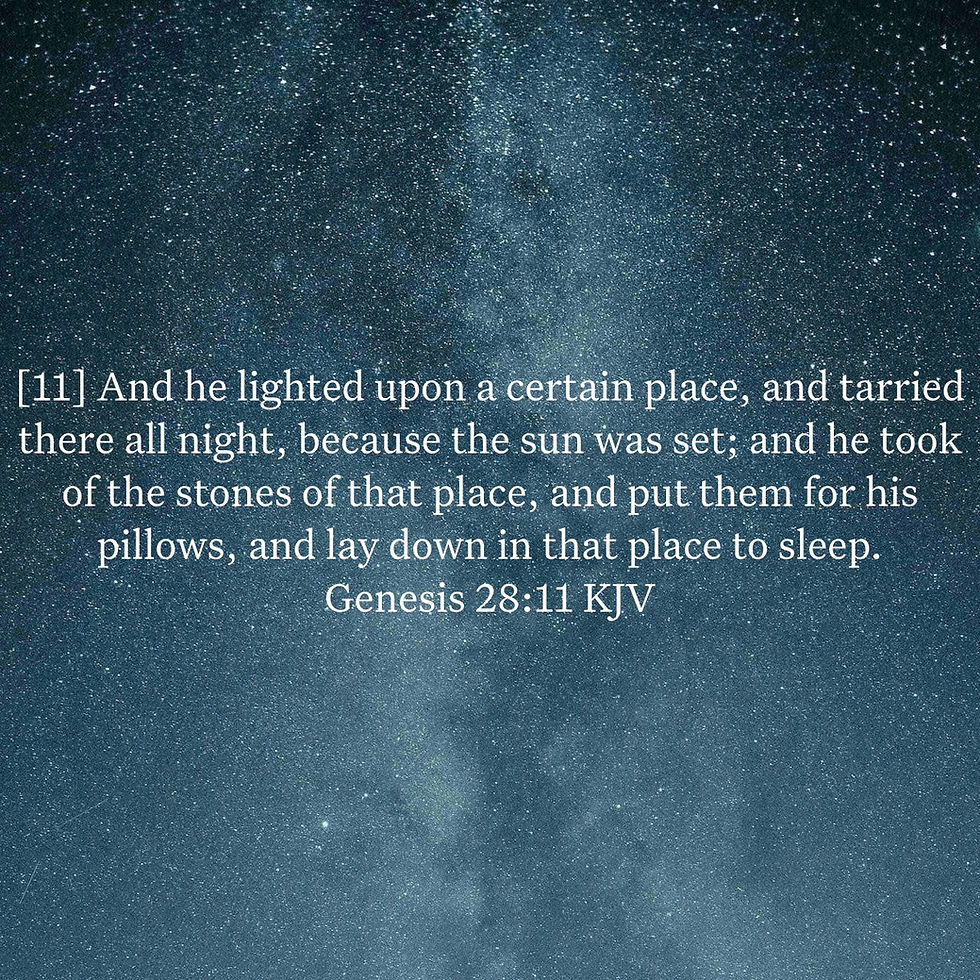
Jacob is not in a comfortable place when this happens. He is not at home. He is not surrounded by family worship. He is not in Beersheba beside Isaac’s altar. He is on the road, with a stone for a pillow. This shows that God often makes inherited faith personal in the lonely places. When the familiar supports are removed, the soul is brought face to face with the Lord.
God identifies Himself as “the Lord God of Abraham thy father, and the God of Isaac.” The word “father” here can refer to Abraham as Jacob’s ancestor, not his immediate father. God is connecting Jacob to the covenant line. He is reminding Jacob that the promise did not begin with him. Jacob is being drawn into a story that began before he was born. God called Abraham. God preserved Isaac. Now God speaks to Jacob.
This should humble Jacob. He is not the author of the promise. He is not the one who created this covenant. He is not blessed because he outsmarted everyone. The covenant began with God’s call, God’s grace, and God’s oath. Jacob is being included in something that rests on divine faithfulness, not human cleverness.
That is especially important because Jacob’s recent actions were full of manipulation. He had disguised himself as Esau. He had lied to Isaac. He had taken the blessing through deception. But here, God does not say, “I am the God of your scheme.” He says, “I am the Lord God of Abraham thy father, and the God of Isaac.” The foundation of Jacob’s future is not Jacob’s deceit. It is God’s covenant.
This does not excuse Jacob’s sin. The consequences of his deception are already being felt. He is away from home because of it. He will soon experience the pain of being deceived himself. But God is making clear that His purpose is bigger than Jacob’s failure. The blessing continues because God is faithful to what He promised Abraham and Isaac.
Then God says, “the land whereon thou liest, to thee will I give it, and to thy seed.” This is astonishing. Jacob is lying on the ground as a traveler, not standing as a conqueror. He does not own the land in any visible way. He has no army, no city, no throne, no house, and no settled inheritance. He is a stranger sleeping outside. Yet God says the very land beneath him will be given to him and to his seed.
Jacob’s body is resting on what his descendants will inherit.
This is the grace of God’s promise. Jacob does not possess the land yet, but God speaks of it as certain. The ground beneath his weakness is the ground of future inheritance. The place where he lies down in vulnerability is the place God promises to give. Jacob may feel displaced, but God is telling him that he is not rootless. The land is still tied to him by promise.
This is one of the great patterns in Scripture: God speaks promise before visible possession. Abraham walked through the land before he owned it. Isaac lived as a sojourner in the land. Jacob now sleeps on the land while fleeing from home. The promise is real, but the possession is not yet complete. Faith must live between the word of God and the fullness of fulfillment.
That is not easy. Jacob is being promised land at the very moment he is leaving it. He is traveling away from Canaan toward Haran, yet God says, “This land whereon thou liest, to thee will I give it.” From a human perspective, the timing seems strange. Why promise land to a man who is walking away from it? Why speak inheritance to someone who has no settled place to sleep?
Because God’s promises are not limited by present circumstances.
Jacob’s departure does not cancel God’s gift. His exile does not erase his inheritance. His weakness does not weaken God’s word. His leaving the land for a season does not mean the land has been taken from the covenant. God can send Jacob away and still bring him back. God can build Jacob’s family in Haran and then return him to the land with children, flocks, and a changed name.
This is deeply encouraging. There are seasons when God’s promise seems contradicted by our circumstances. A person may feel called, yet delayed. Blessed, yet burdened. Chosen, yet lonely. Forgiven, yet still facing consequences. Jacob is promised the land while sleeping outside and preparing to leave it. The outward situation looks opposite of the spoken promise, but God’s word is stronger than the appearance of the moment.
The phrase “whereon thou liest” is tender and powerful. God does not speak vaguely. He points to the very ground beneath Jacob. The place of his exhaustion becomes the place of promise. The place of his vulnerability becomes the place of inheritance. The place where his head rests on stone becomes the place God names in covenant speech.
This teaches us that God sees the exact place where we are. He does not only deal with His people in general terms. He knows the ground beneath us. He knows where we lie down weary. He knows the road we are on. He knows the place that feels temporary, uncomfortable, and uncertain. Jacob might call it “a certain place,” but God knows exactly what He intends to do there.
The promise is given “to thee, and to thy seed.” This means Jacob’s life is not only about Jacob. His future is tied to generations. He is one man lying alone at night, but God speaks of descendants. Jacob sees the present loneliness. God sees the future multitude. Jacob sees one body on the ground. God sees tribes, families, and a nation. Jacob sees a stone pillow. God sees Israel.
This should remind us that God often places generational promises in lonely moments. Jacob could not have known everything that would come from him. He could not see Reuben, Simeon, Levi, Judah, Joseph, Benjamin, and the rest. He could not see Moses, David, the prophets, or the Messiah who would come through his line. But God saw it all. God was speaking to one man, but His purpose reached far beyond that one man.
The blessing of God is often larger than the person receiving it. Abraham was blessed so that all families of the earth would be blessed. Isaac was preserved so that the covenant line would continue. Jacob is promised land and seed because God is building the people through whom redemption will unfold. The promise is personal, but it is not private. It is for Jacob, his seed, and ultimately the nations through Christ.
This verse also shows the grace of divine initiative. Jacob does not ask for this dream. He does not build an altar first. He does not pray an impressive prayer. He does not make a vow before God speaks. God comes first. God reveals. God speaks. God promises. Jacob’s response will come later, but the Lord is the initiator.
This is how grace works. God comes to the undeserving. God speaks to the fearful. God promises before we know how to respond properly. Jacob is not sought by God because he has proven himself worthy. He is sought because God is faithful. The covenant does not rest on Jacob’s spiritual maturity. It rests on the Lord who stands above the ladder.
There is also a quiet correction in God’s words. Jacob has been trying to secure the blessing by human effort, but now God shows him that the promise can only be received from above. Jacob’s hands had grasped Esau’s heel. His mouth had lied to Isaac. His body had worn Esau’s clothes. But none of those things created the covenant. God’s word creates certainty. God says, “to thee will I give it.” Not “you will steal it,” not “you will manipulate your way into it,” not “you will seize it by cleverness,” but “I will give it.”
The promise is a gift.
That is the lesson Jacob must learn. The blessing of Abraham is not obtained by deceit, but given by God. The inheritance is not secured by human striving, but by divine faithfulness. Jacob must still obey, travel, labor, and endure, but beneath all his actions is the greater truth that God gives what He has promised.
This is a lesson every believer must learn. We may work, plan, study, serve, build, and obey, but we cannot manufacture the promises of God. We cannot force heaven open. We cannot create grace. We cannot earn covenant mercy. We receive from the God who gives. Our labor matters, but His promise is the foundation.
The Lord’s words also remind Jacob that the covenant is not broken by distance. Jacob is heading away from the land, but God’s word anchors him to it. He may spend years in Haran, but the land remains part of his promised future. God’s promise can follow him away and bring him back again. God is not only the God of Beersheba. He is not only the God of Abraham’s altar or Isaac’s wells. He is the God who speaks in the night, on the road, over the traveler.
This would have been vital for Jacob. He needed to know that leaving home did not mean leaving God. He needed to know that the blessing Isaac spoke was confirmed by the Lord Himself. He needed to know that the covenant did not vanish when he crossed into uncertainty. God meets him before he arrives at Haran, so Jacob knows that God is with him on the way.
For the Christian, this verse points again to the faithfulness of God in Christ. The land promise had its place in the covenant history of Israel, but the ultimate hope of God’s people reaches beyond earthly possession. In Christ, believers are made heirs of promises greater than Jacob could have imagined. We are given not merely a strip of land, but an eternal inheritance. We are made children of God. We are joined to Christ. We await a new heavens and a new earth wherein righteousness dwells.
Yet the pattern remains the same. God speaks promise to people who do not yet see full possession. We live by faith. We have the Spirit as the earnest of our inheritance, but we still wait for the fullness. We are citizens of heaven, yet we walk as pilgrims on earth. We are raised with Christ spiritually, yet we still await bodily resurrection. Like Jacob, we lie on the ground of promise before we see all that God will give.
This verse calls us to trust the God who stands above the ladder. He sees more than we see. He speaks more firmly than our circumstances speak. He promises with authority. When He says, “I will give,” the matter rests not on the weakness of the receiver, but on the faithfulness of the Giver.
Jacob’s night was dark, but God’s word was clear. Jacob’s pillow was stone, but the promise was sure. Jacob’s future was uncertain to him, but not uncertain to God. The Lord stood above the ladder and declared Himself to be the God of Abraham and Isaac. Then He placed Jacob directly in the covenant line by promising him the land and his seed after him.
Genesis 28:13 reminds us that God meets His people in the exact place of their weakness and speaks promises stronger than their circumstances. Jacob lay as a stranger on the ground, but God called that ground an inheritance. Jacob was one man in the night, but God spoke of his seed. Jacob was leaving the land, but God promised to give it.
The Lord stood above it all.
He stood above the ladder. He stood above the angels. He stood above Jacob’s fear. He stood above the family conflict. He stood above the consequences of sin. He stood above the uncertainty of the journey. And from that place of sovereign authority, He spoke grace.
That is the hope of this verse. The Lord is above it all, and His promise does not fail.
If you would like to explore Genesis in a sustained, verse-by-verse way with space to reflect, journal, and trace how these foundational truths unfold through Scripture the Verse by Verse book expands these reflections into a unified reading experience. The book gathers these meditations into a structured journey through Genesis, designed to help readers linger in the text and engage God’s Word more deeply over time.


Comments