Genesis 16:13 Daily Devotional & Meaning – El Roi, the God Who Sees Hagar and the Overlooked

Daily Verses Everyday! Day 70
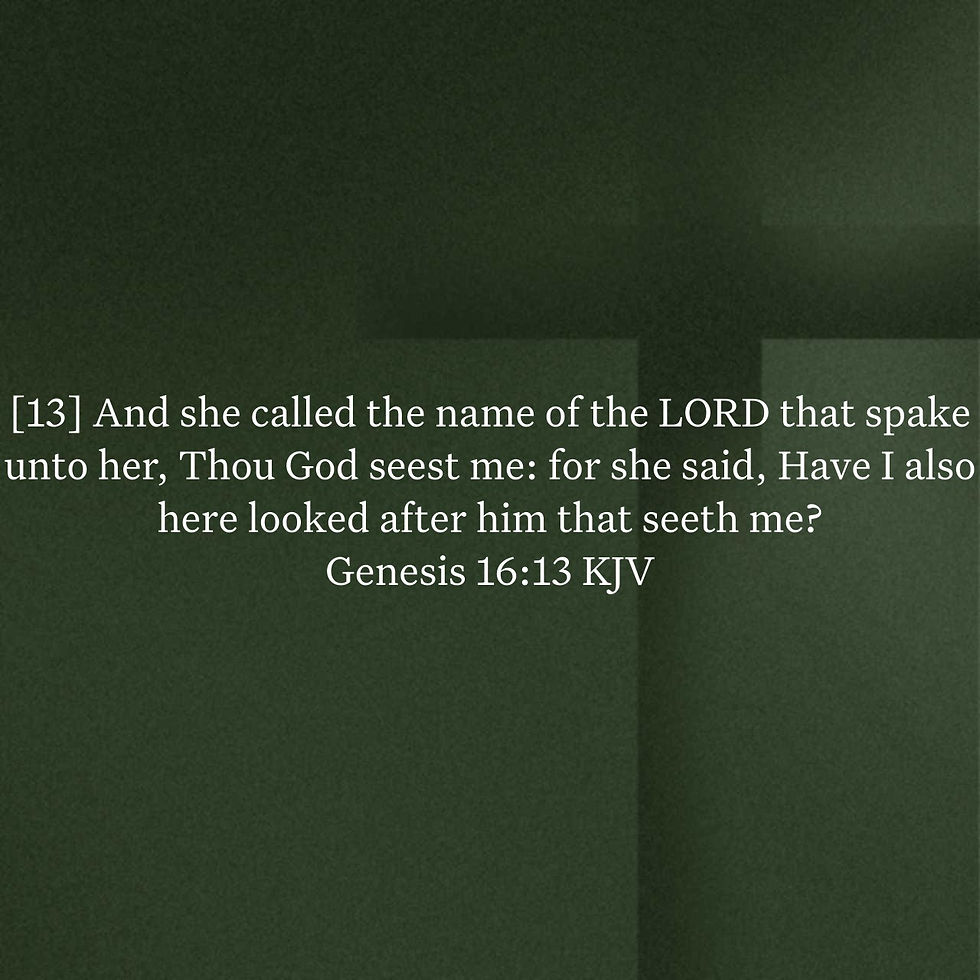
“And she called the name of the LORD that spake unto her, Thou God seest me: for she said, Have I also here looked after him that seeth me?”
This verse might seem simple, but a deeper examination reveals profound truths about God, human suffering, and the ways He reaches those who are overlooked. At this point in the narrative, God has never appeared to Sarai, the wife of Abram, the one whose lineage is central to the covenant promises. Yet it is Hagar, the servant, the overlooked and often forgotten, who encounters God directly. This reversal is remarkable and intentional: God’s care is not limited to the prominent, powerful, or socially recognized. He actively seeks out the vulnerable and marginalized—those whom human eyes fail to notice.
Hagar, fleeing from Sarai’s harsh treatment, embodies the forgotten, the invisible, and the emotionally wounded. She represents every person who feels overlooked by society or abandoned by circumstance. Yet God finds her in her despair, speaks to her, and offers both guidance and affirmation. In this encounter, Hagar names God “El Roi,” meaning “The God who sees.” This is more than an acknowledgment; it is a spiritual revelation. Hagar has experienced firsthand a God who perceives her pain, validates her suffering, and restores her dignity.
The significance of this verse lies in the relational nature of God. He does not remain distant, indifferent, or detached. Instead, He engages personally with those in distress. Hagar’s story demonstrates that God often reveals Himself to those who recognize their need and those who are “spiritually sick,” marginalized, or vulnerable. This principle is echoed by Jesus in the New Testament: “It is not the healthy who need a doctor, but the sick” (rephrased) particularly in Mark 2:17. The spiritually and emotionally wounded, those aware of their brokenness, are precisely the ones who encounter God most profoundly. Hagar’s realization underscores this truth: in the midst of her invisibility, she has been seen, and in her despair, she has been addressed by the living God.
From a theological perspective, Hagar’s encounter is a demonstration of God’s radical inclusivity. Throughout Scripture, God lifts up the lowly, gives attention to widows and orphans, and speaks to the outsider. Hagar’s experience is a template for understanding God’s heart: He is attentive to all, especially those whom the world forgets. Her recognition that God sees her challenges us to rethink our understanding of divine care. It is not contingent upon human approval, societal status, or merit. God’s gaze is steadfast, deliberate, and redemptive.
This narrative also offers a practical lesson about spiritual awareness and humility. Like Hagar, we are often in positions of vulnerability, whether through emotional pain, social marginalization, or personal failure. Recognizing our need for God and acknowledging our own weakness, sin, or insufficiency is the first step toward healing. Consider the analogy of a man going to a doctor. He does not seek the physician because he feels perfectly healthy; he seeks help because he senses something is wrong. The symptoms like the fatigue, the fever, and the pain reveal his incapacity to restore himself alone. The doctor diagnoses, treats, and provides a path to healing.
In the same way, the law and our recognition of sin function like those symptoms. They reveal the sickness of our soul, the ways we fall short of God’s standard, and the spiritual brokenness that separates us from divine life. This recognition is not intended to condemn us but to awaken us to our need for God’s restorative intervention. Hagar’s encounter exemplifies this principle: she does not come to God as someone self-sufficient or righteous; she comes as one who has been wounded, rejected, and marginalized. God meets her precisely in that state, offering guidance, hope, and affirmation.
Practically, this teaches us how to approach God in our own lives. When we feel forgotten, overwhelmed, or powerless, we can follow Hagar’s example and speak honestly to God: “Lord, You see me. I am weak. I am lost. I am in need of You.” Just as Hagar’s flight became an encounter with God, our moments of vulnerability can become moments of profound spiritual revelation. This requires humility, honesty, and the willingness to acknowledge our own brokenness.
Hagar’s experience also challenges us to reflect God’s attentiveness outward. If God sees the overlooked and forgotten, so too are we called to notice the marginalized in our midst. We can extend God’s restorative care by speaking encouragement to the voiceless, advocating for those who are overlooked, and simply noticing those who feel invisible. In doing so, we mirror the divine attention that restored Hagar’s dignity and hope.
The journey from sickness to healing ultimately points to the Gospel. Recognition of our sin, which is the “symptoms” revealed through the law, ultimately leads us to Christ, the ultimate healer, who restores the broken, strengthens the weak, and affirms the invisible. Just as the man trusts the doctor to restore his body, we trust God to restore our souls. Hagar’s declaration, “Thou God seest me,” becomes a powerful spiritual template: even when humanity fails to notice us, even when circumstances are painful, God is intimately aware and actively working to restore.
In conclusion, Genesis 16:13 offers both a theological insight and a practical application. Theologically, it highlights the relational and attentive nature of God, who seeks out the marginalized and restores dignity to the overlooked. Practically, it calls us to humility, honesty, and reliance on God’s restorative power. Through the law and through the awareness of our sin, we recognize our spiritual sickness—much like a man recognizing physical illness—and are drawn to the One who heals. Hagar’s encounter reassures us that God sees us, knows us, and values us, regardless of human neglect. In our own lives, acknowledging our need and turning to God allows us to experience His healing, His restoration, and His presence in ways that transform despair into hope, marginalization into significance, and fear into the confident trust that “Thou God seest me.”
If you would like to explore Genesis in a sustained, verse-by-verse way with space to reflect, journal, and trace how these foundational truths unfold through Scripture the Verse by Verse book expands these reflections into a unified reading experience. The book gathers these meditations into a structured journey through Genesis, designed to help readers linger in the text and engage God’s Word more deeply over time.



Comments