Genesis 19:17 Daily Devotional & Meaning – Escape for Your Life, Don’t Look Back, and Flee the Old Self

Daily Verses Everyday! Day 80
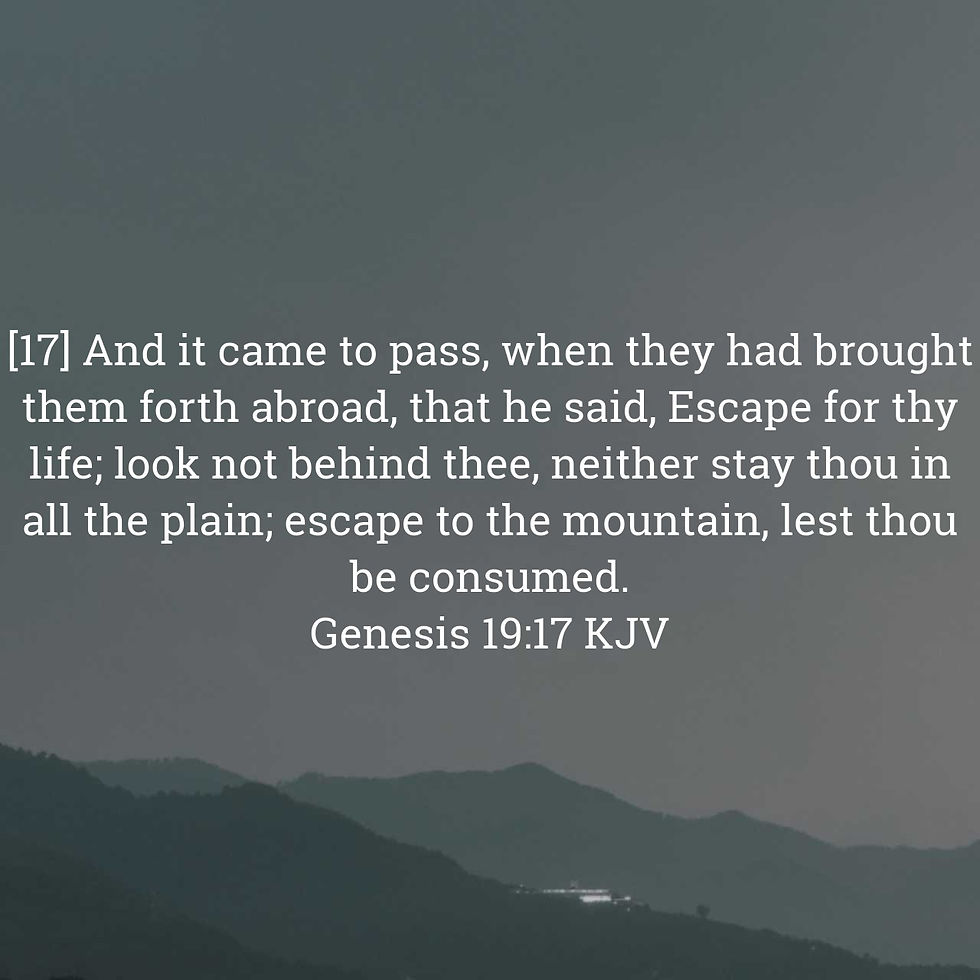
“And it came to pass, when they had brought them forth abroad, that he said, Escape for thy life; look not behind thee, neither stay thou in all the plain; escape to the mountain, lest thou be consumed.”
Genesis 19:17 is one of the most symbolically rich verses in the entire Sodom narrative. After the angels finally pull Lot and his family out of the doomed city, they give a command that is both simple and deeply theological: “Escape for thy life; look not behind thee… escape to the mountain, lest thou be consumed.” On the surface, it is a straightforward instruction for survival: run and don’t stop. But spiritually, it carries the weight of the entire biblical theme of repentance, transformation, and the cost of clinging to an old way of life. This moment shows us what Paul will later express with clarity in Romans: the old self must die, and any attempt to turn back toward sin is a turn toward destruction, because “the wages of sin is death.”
The command “look not behind thee” is more than a physical warning. It represents the decisive break that every believer must make from their old sinful nature. When Paul speaks in Romans 6 of the believer being “crucified with Christ” so that the old self might be destroyed, he is describing the same spiritual reality embodied in Lot’s flight. Leaving Sodom is an image of conversion itself, the moment God drags a person out of the place that was killing them. But even after being pulled out by grace, the temptation exists to turn around, glance back, and long for what God rescued us from. Paul calls this presenting your members as instruments of unrighteousness, or letting sin reign again after being set free. In Lot’s story, the consequences of turning back are immediate and visible. In ours, they may unfold more gradually, but the end result is the same: death, hardness of heart, and spiritual decay.
The call to “escape to the mountain” also carries deep resonance with Paul’s theology. Mountains in Scripture often represent God’s presence, His calling, His holiness, and His purposes. To flee to the mountain is to move upward toward God, even if it feels difficult, steep, and costly. This mirrors Paul’s instructions in Romans 12 to “present your bodies a living sacrifice” and “be transformed by the renewing of your mind.” Transformation always requires movement away from the old life and toward the life God is forming in us. The mountain symbolizes not just escape but ascent. The life of holiness is not passive; it requires active pursuit, obedience, and endurance.
Furthermore, the warning “lest thou be consumed” ties perfectly to Paul’s argument that sin leads inevitably to destruction. Romans 6:23 states it plainly: “For the wages of sin is death.” This is not merely a legal penalty but a spiritual reality woven into the fabric of existence. Sin erodes, corrupts, and kills. Sodom was simply the outward picture of what sin does to the soul. God was not being arbitrary; He was showing in visible fire what invisible sin does every day. To look back at Sodom, to desire its values, comforts, and pleasures, is to align oneself again with what God is judging. It is to step back under the avalanche that grace just pulled you out of.
Lot’s wife tragically becomes the living illustration of what happens when the heart lingers in what God has condemned. She had been physically delivered but spiritually divided. Her body was leaving Sodom, but her affections had not. Her backward glance was not a moment of curiosity; it was a revelation of loyalty. It showed where her heart still lived. Paul describes this inner conflict in Romans 7, where the believer must fight the pull of the flesh. But he also gives the triumphant answer in Romans 8: that life in the Spirit leads to freedom, whereas life in the flesh ends in death. Lot’s wife embodied the flesh’s pull so vividly that she became a monument to the danger of unfinished repentance.
For the believer today, Genesis 19:17 is a personal command from God’s heart: Do not look back. Do not long for old sins. Do not return to bondage. Do not flirt with the habits that once owned you. Every look back is spiritually costly. Every compromise invites consumption. Yet God’s command is not merely prohibitive; it is also protective. He calls us to flee so that we might live. He tells us not to look back because He knows what lies behind us: destruction, emptiness, and death. Paul echoes this with the force of certainty in Romans 8:13: “If ye live after the flesh, ye shall die: but if ye through the Spirit do mortify the deeds of the body, ye shall live.”
In the end, this verse is a stunning picture of the Gospel. God rescues us before we rescue ourselves. He pulls us out when we linger. He warns us lovingly because He desires our life, not our ruin. And then He calls us upward, away from destruction and into newness. Lot’s escape is our story: drawn out by grace, commanded toward holiness, and warned not to return to chains. And just as Sodom was no longer a place Lot could survive, sin is no longer a place we can live. To follow Christ is to flee Sodom forever. To obey Him is to live.
If you would like to explore Genesis in a sustained, verse-by-verse way with space to reflect, journal, and trace how these foundational truths unfold through Scripture the Verse by Verse book expands these reflections into a unified reading experience. The book gathers these meditations into a structured journey through Genesis, designed to help readers linger in the text and engage God’s Word more deeply over time.


Comments